
“We are not an office of ‘big names’,” Julie Sjøwall Oftedal, a partner at A-lab, one of Scandinavia’s foremost architecture studios, says proudly. “In many architecture firms, there’s this master figure—a guru who shows others how things ‘should’ be done. A-lab is not like that. Instead, our studio was built to be a place where the best idea is used, no matter who or where it comes from. That’s part of why none of our buildings ever look alike.”
A-lab—that’s architectural laboratory—was founded in 2000 by two young architects, Geir Haaversen and Odd Klev, to be a studio that did something different. It would, for one thing, encourage all its team members and collaborators to bring their own unique expertise to the table. Yet, it’s approach to design would be different too. It wouldn’t create places simply to complement the present urban fabric. Instead, A-lab strives to make its places “future-proof”—by working to understand the needs of the users of the future.
This approach has borne results. Twenty years on, A-lab is recognised as one of the most innovative architectural studios in Scandinavia, having designed some of Norway’s most iconic contemporary buildings and neighbourhoods. However, their focus is on the improvements they can bring to users’ quality of life, where the building’s form is only part of it.
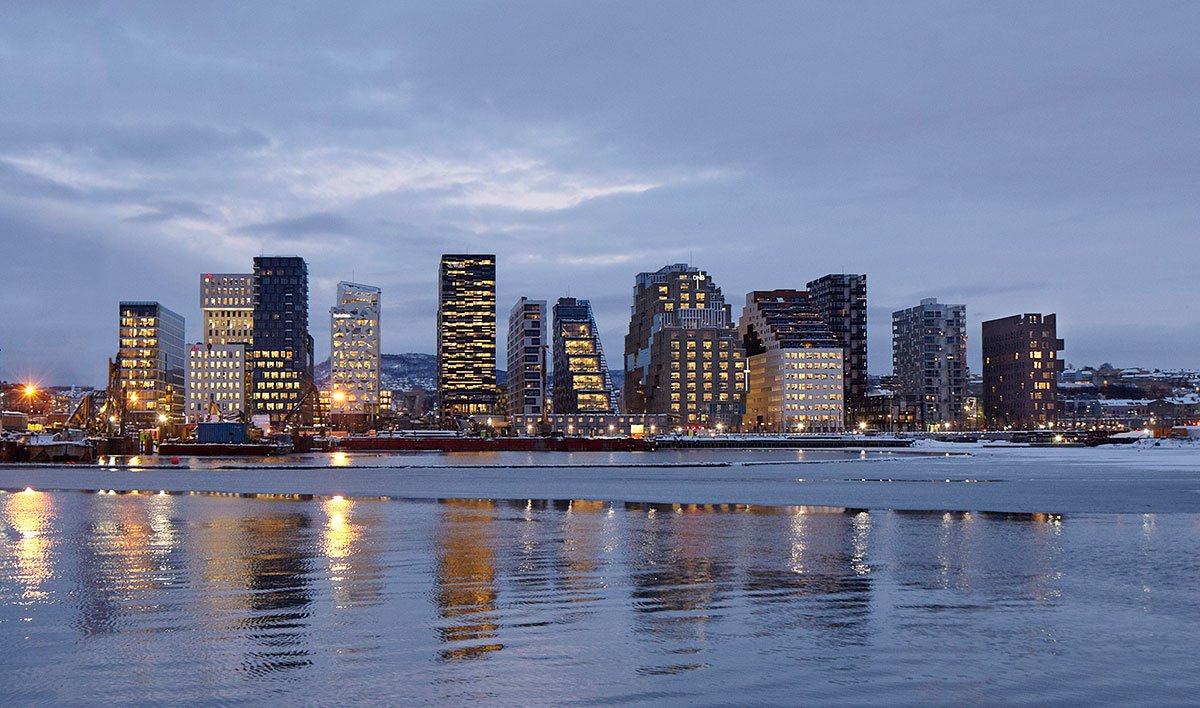
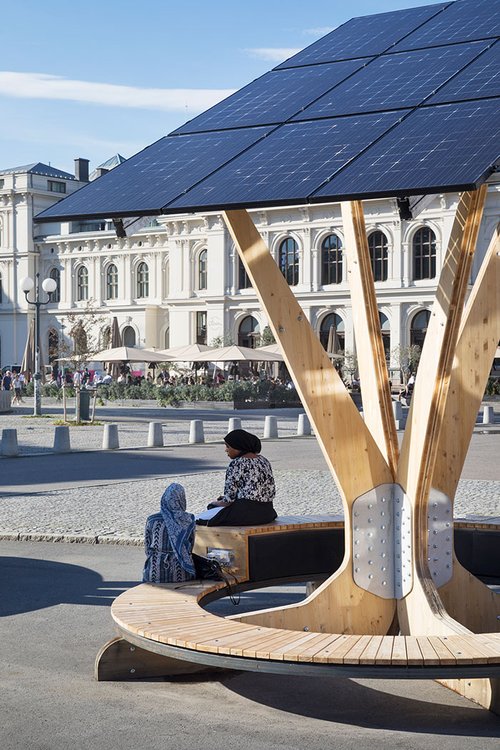
“The master plan of Barcode and Bjørvika, Oslo’s central business district, is one of our personal favourites,” Julie tells us. “We’re incredibly proud of the residential neighbourhoods we planned in Kristiansand, in Kjelsås, and in Moss, too. We love to work at different scales. So, while we’re part of some of the biggest urban plans in Norway right now, we still produce works like the solar cell trees that you find across Oslo.”
Even for those smallest projects, an astonishing level of coordination goes into A-lab’s work. The studio handles everything from the initial spatial analysis to the refinement of the tiniest final touches. As Julie explains, “To connect the dots that form the bigger picture, we’ve expanded our crew to include social scientists, urbanists, landscape architects, interior designers and technologists. For us, interdisciplinary collaboration is the only way to really understand a space and its users.”
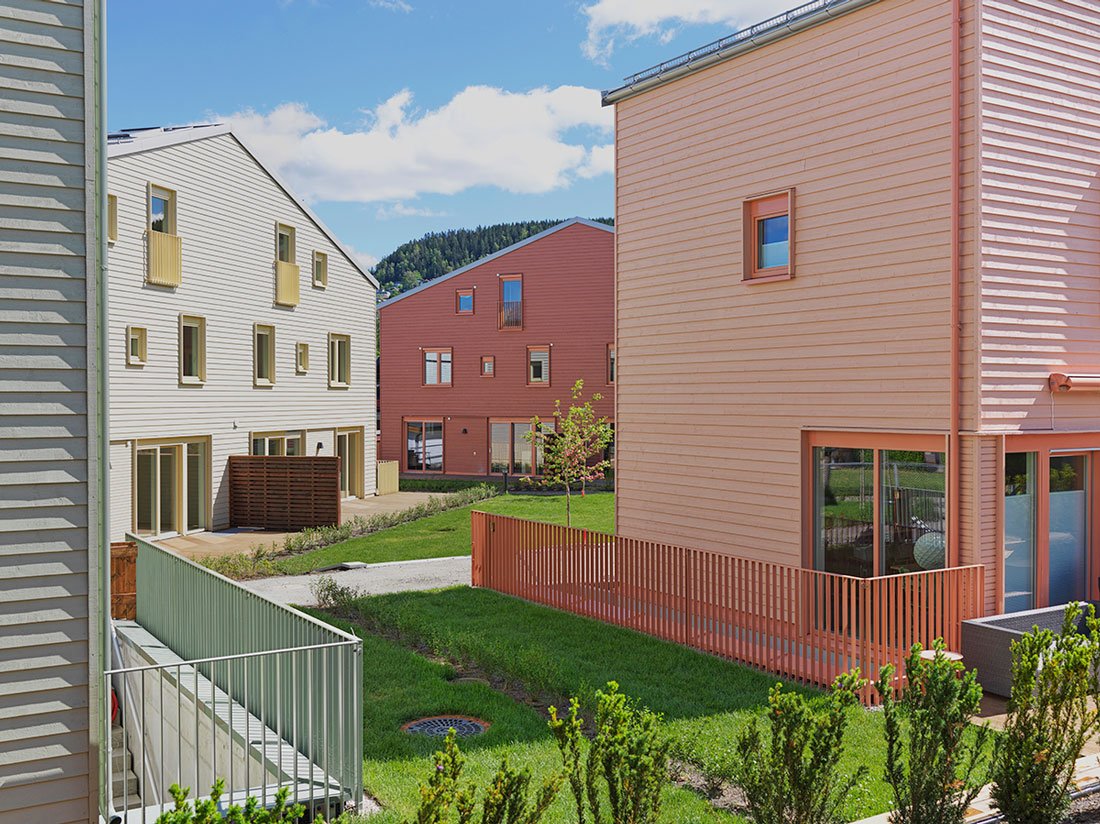
So, what makes a space good for people? For A-lab, the notion of “meetings” or “interaction” is crucial. Meetings can be about business and the exchange of ideas. But a good meeting—particularly one that’s unplanned—is central to all social life. As Julie explains, “we planned Kanalbyen in Kristiansand to bring together different demographics in a destination for recreation for the whole city. Similarly, in Kjelsåsveien, we designed a residential district that used the walls of houses to create outdoor spaces for community interactions. Really, it’s through those interactions that a sense of identity and belonging can be built. Any well-designed space should encourage them.”
Yet, there is something else about Kjelsåsveien that Julie is proud of: its palette, which A-lab developed by scanning colours from local buildings and combining them with colours from Oslo’s historical architecture. “That expertise started with a single architect—my colleague, Line Musæus. She believes colour will be particularly important in creating humane spaces in the future—and a good idea in A-lab is always rooted for!”
A-lab’s founders have always encouraged to think big, Julie tells us, even when working on something completely new. It’s this mindset that’s behind one of A-lab’s biggest realized projects to date: the regeneration of Bjørvika and Bispevika, Oslo’s old container port. A-lab has helped to completely transform the area into a mixed-use residential, business, and lifestyle district. To do this, the studio created a plan based on what it calls the area’s “urban floor”—a strategy of an indoor and outdoor space that would ensure activity on ground level round the clock. This way, the people of Oslo could use the entire area of the new neighbourhood—once more, to enable new interactions.
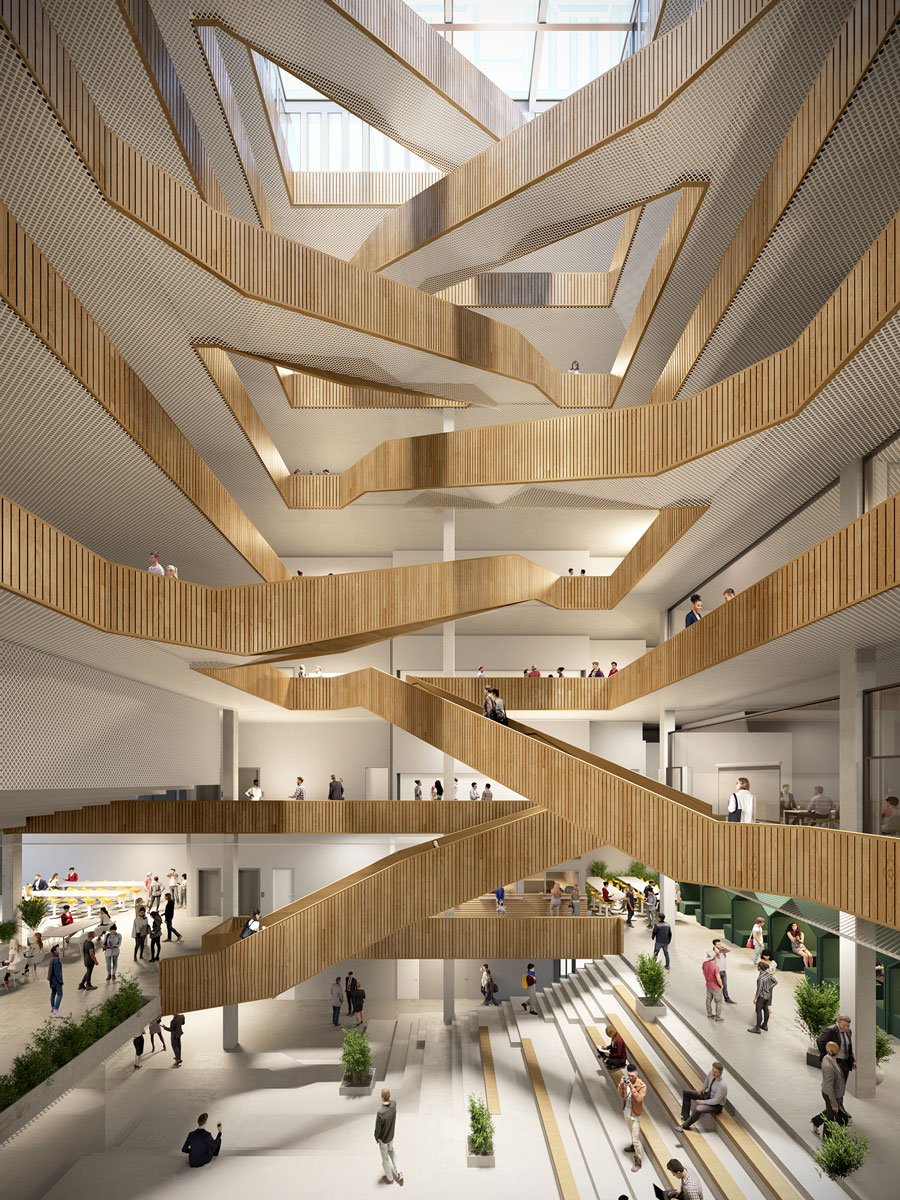
Oslo’s is growing explosively, and A-lab is at the heart of some of its central developments. Through Galleri Oslo, for example, they are connecting central Oslo to the city’s east. Meanwhile, in Oslo Science City, they’re facilitating value creation in what will become Norway’s new innovation district. Whatever the project, Julie emphasises, A-lab’s priority is to identify and respect the qualities that already exist in the area. How can these be given room for growth? What can be reused? And how can areas be built so that they can be altered for other purposes in the future?
Now, a natural next step for the studio is to look abroad. “We’ve been busy with competitions in France, and a partner opened A-lab’s first studio in Portugal some years back,” Julie explains. “We’re also now a partner in Include, an international research programme investigating the social impact of increasing urban density.”
As such, A-lab might be spreading its wings across Europe, but it’s determined to keep in touch with its core values—and its people. “We do feel that we have something to contribute. But just as importantly, it’s our eagerness to learn that drives us to create something new.”