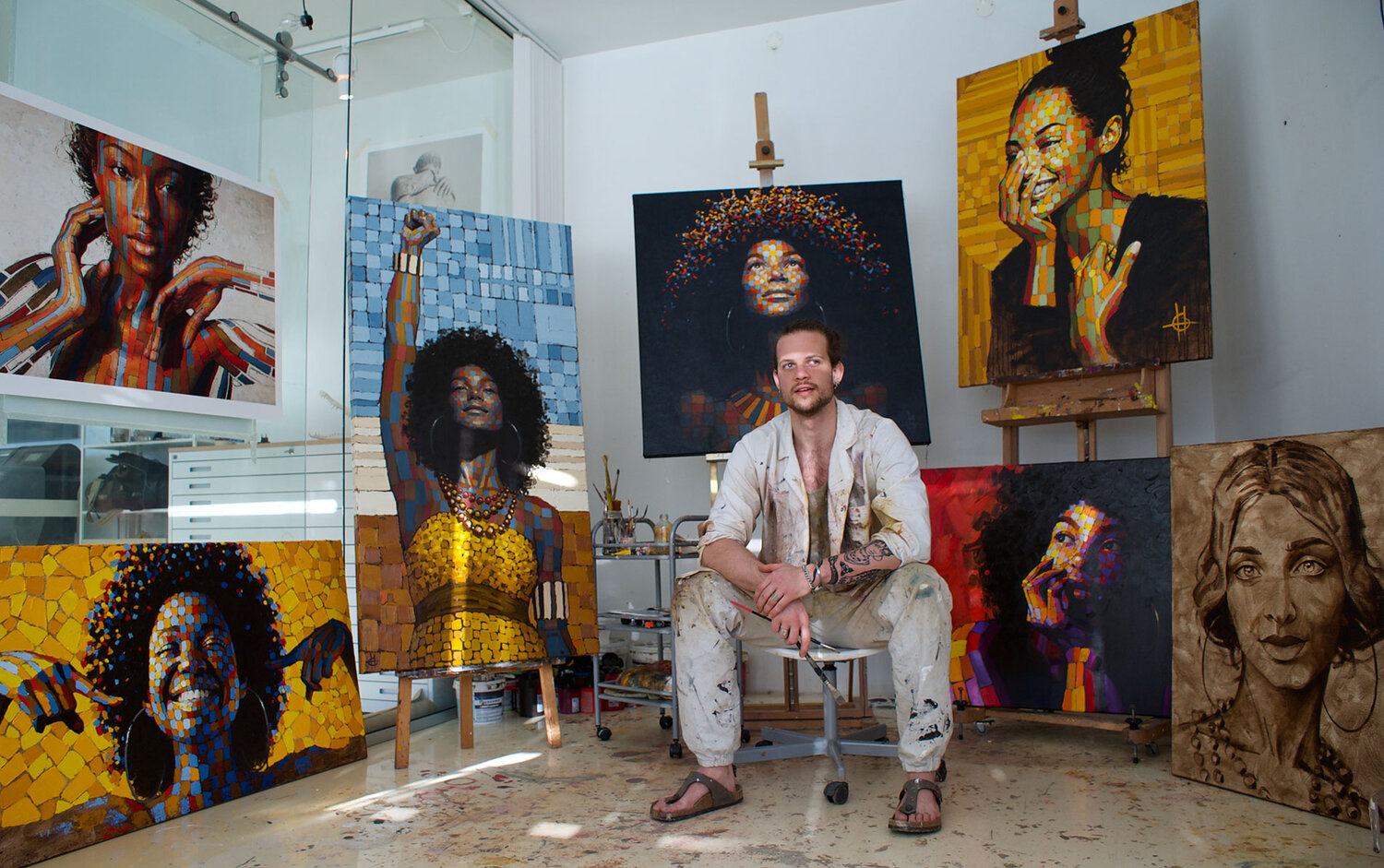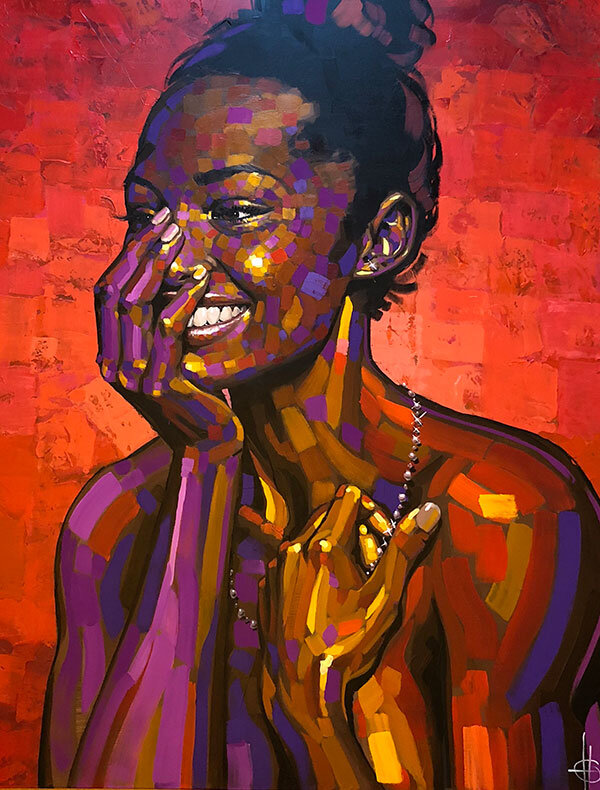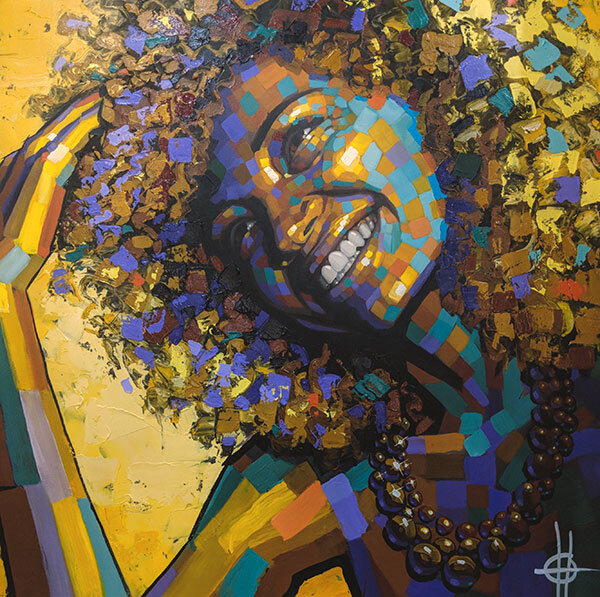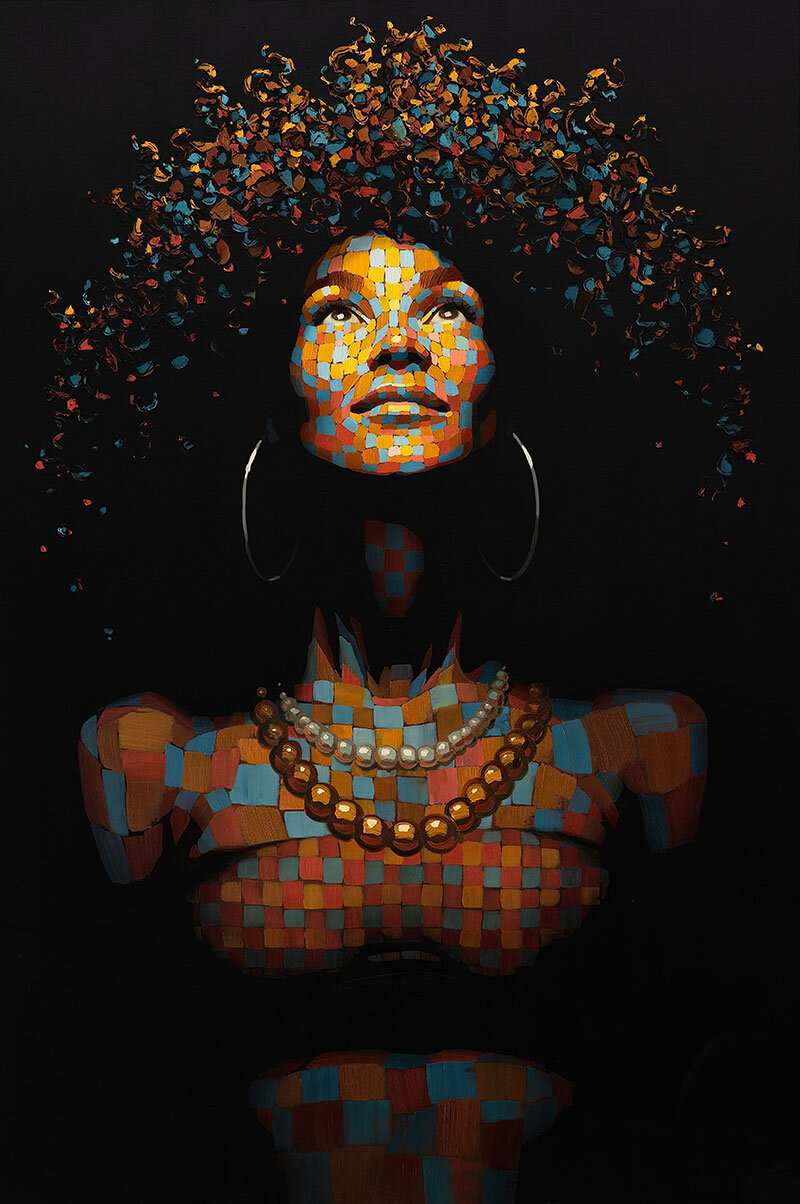

That is what Håkon Børs-Lind, the artist behind the street name HAREM, calls his unique style of painting. “This is both because of the style itself, which resembles the laying of mosaic tiles to form a picture, and partly because I started developing this style in the country of Mozambique, where I was lucky to spend some time a few years back,” explains Håkon. In fact, the term mosaicism could also apply to how different pieces of experience have completed the picture that is HAREM today.
Firstly, there is his artistic side, born as a street artist, nurtured and developed when he travelled through 17 countries in Africa, where he built sports centres, over a period of two years. “I always enjoyed drawing and sketching, and in Africa I spent hours and hours driving alone and had a lot of time to think and create ideas”, tells Håkon. He would sketch down his ideas quickly, sometimes by the side of the road, perhaps never knowing whether it would ever turn into something bigger. However, the seed of a career as an artist had been sown.
Then, there is the other side of him, the one that moved to Bergen to study to become a qualified nurse, the one who works in a hospital and saw painting more as a way to relax between diving into books as a student and helping patients as a nurse. “I really enjoy working as a nurse, the way you interact with people in their most vulnerable moments, and being able to help and comfort them, has given me some inspiration for how I think about art,” he says thoughtfully. The two worlds are even merging now, as he has recently been awarded the job to provide art for Sandviken Sykehus in Bergen, perhaps symbolic of the two sides of him merging into one. This was also evident when he displayed a large painting at Oslo Central station last summer, in support of the nurses and medical personnel fighting the coronavirus that was sweeping the country. “I painted the painting wearing a nurse uniform, and when it was done, I wore the uniform, full of paint stains, to a TV interview,” says Håkon. Many people have mentioned that it really brought home the struggle faced by the nurses in hospitals at the time.
Yet, he never really thought of art becoming anything more than a hobby, until a friend convinced him that his paintings were really good, so they loaded up the car with his art pieces and drove around to several galleries in Bergen. Much to his surprise, one gallery decided to take all of them, and he realised that his work really did offer something new and unique to the art scene. “In some ways, I was deprived of the initial phase of struggling that all great artists speak of,” laughs Håkon, “but I am not complaining.”
His style means that each painting is usually planned to a great level of detail before he starts working on it. He often uses live models for a photoshoot, where he can take 100-200 photos before finding the one that fits the vision he has in his head. “There is always a message in my artworks,” he says. Sometimes, he fails to fulfill his original vision, and the painting ends up in a status he calls “på tenk”- i.e., literally “at thinking stage”, where he might return to it later when a new vision hits him. Or the painting might end up being discarded. “Canvas is expensive,” he explains, “and it is good for the environment to reuse it.”
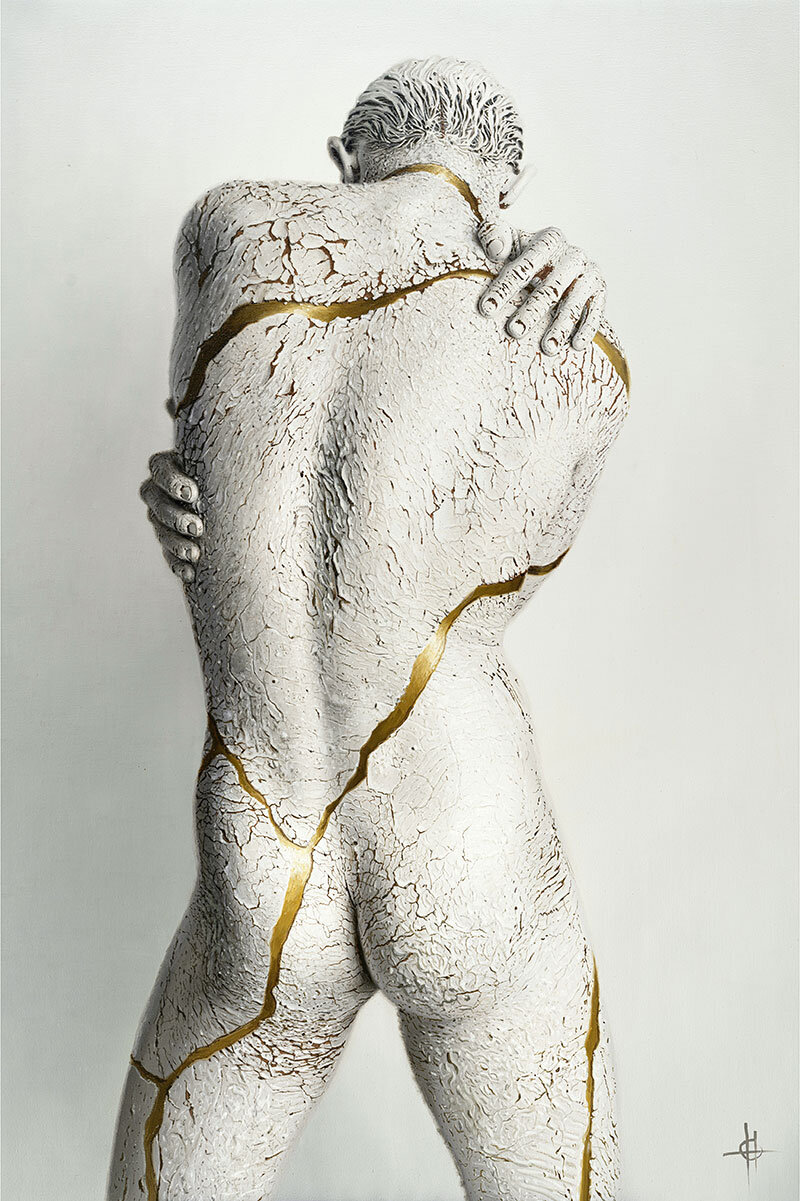
Although best known for his work in mosaicism, Håkon has also recently worked with paintings in the style of realism. Currently, he is working on a piece called “Hope”, but he recently completed the painting “Golden Repair”, which was painted in honour of the victorious fight against cancer by a close friend and inspired by the Japanese philosophy of Kintzugi – where broken items of porcelain are glued together with gold and revered as even more valuable after the repair than it was before it broke.
When asked where the name HAREM comes from, Håkon explains that it dates back to the time he travelled around presenting his paintings to gallery owners in Bergen. “The owner that accepted my first paintings said I should have an artist name, and in the car on the way home I agreed with my friend that HAREM sounds both intriguing and mysterious, so I stuck with it,” he laughs.