
The food of Norway is closely tied to the country’s landscapes and natural rhythms. Norway’s coastline, characterised by its deep fjords, is one of the longest in the world, providing an ample supply of seafood. The mountains offer game such as moose and reindeer, and the pastures provide grazing ground for cattle and sheep. Turn to the forests and you’ll find berries and fruit, ripened by long summer days. And in the arable fields of the south, grain is grown for breads and cereals. Every corner of the country contributes something to Norway’s diverse and surprising cuisine.
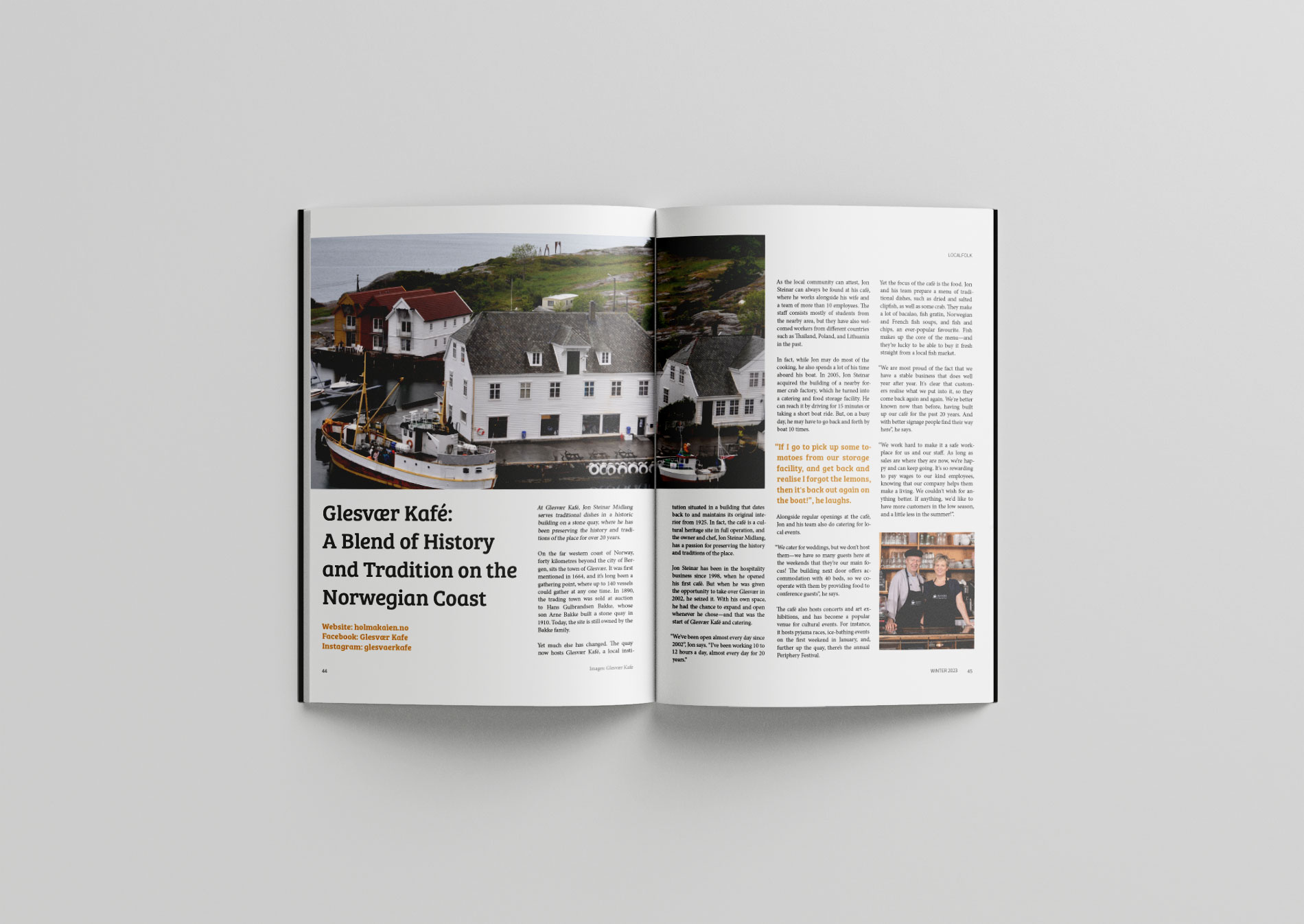
Yet it’s the local people, often still using traditional methods, that craft that raw material into something delicious. Many businesses still maintain the practice of making cheese, with Norwegian varieties such as the brunost—a distinctive brown cheese—still popular. Others turn the rich varieties of grain, including spelt and rye, into bread. And methods for preserving meats, fish, and fruits are an essential part of Norwegian culinary tradition, with cured or pickled fish, smoked meats, and fruits made into preserves, jams, or ciders. When it comes to food, Norwegians are a resourceful, talented, and innovative bunch.
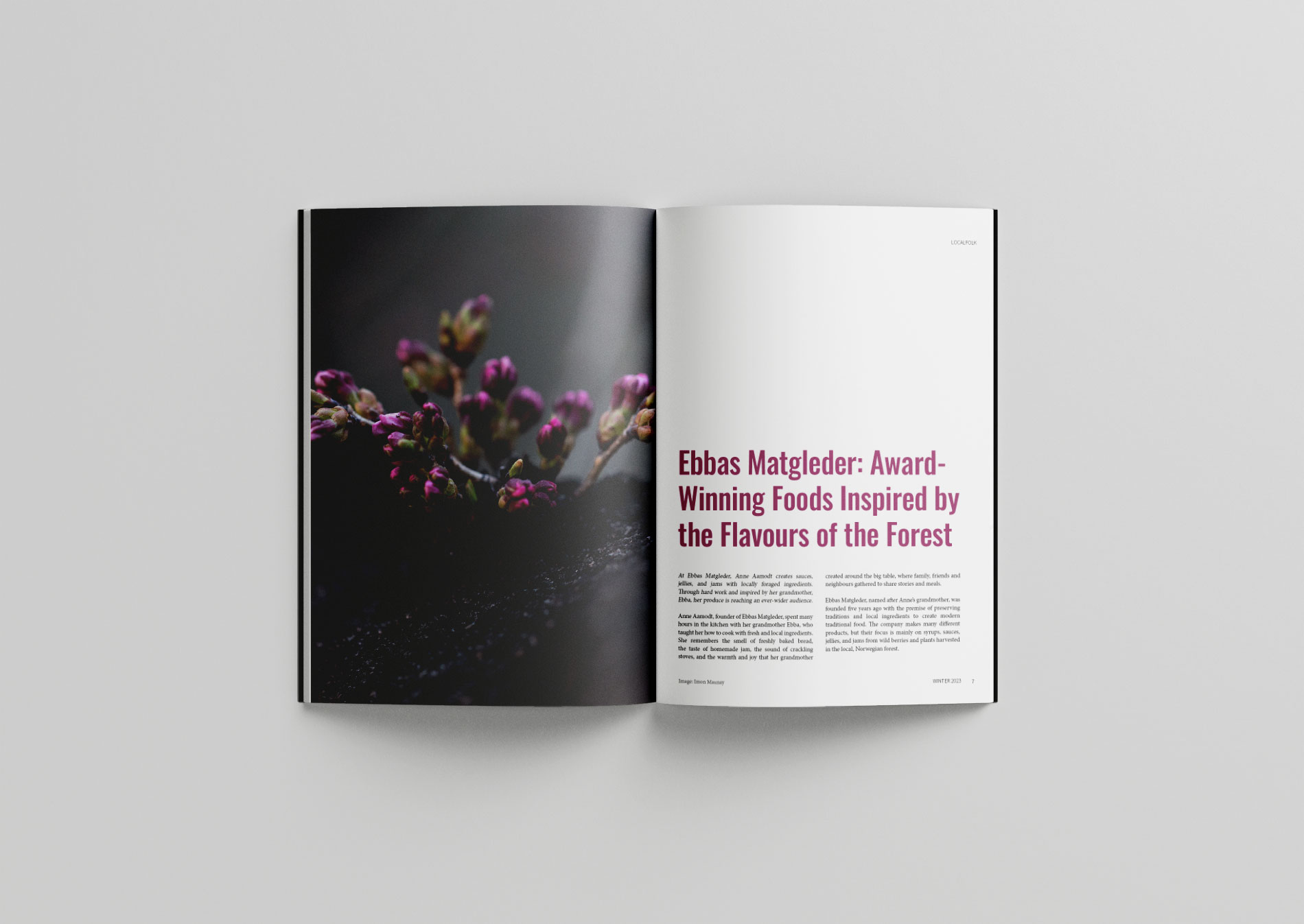
In this edition of Localfolk, we speak to some of the makers and chefs across the country who are making a name for themselves with their recipes and products. Typically based in their communities and using traditional methods, many of these companies have been preparing food in the same way for generations. For instance, we speak with a family business in Gjesdal, Rogaland, that has been producing cereals and grains for five generations. And we talk with a company in Gardvik, Innlandet, that’s producing award-winning fruit preserves inspired by the owner’s grandmother. There’s no doubt that history is a big part of what they do.
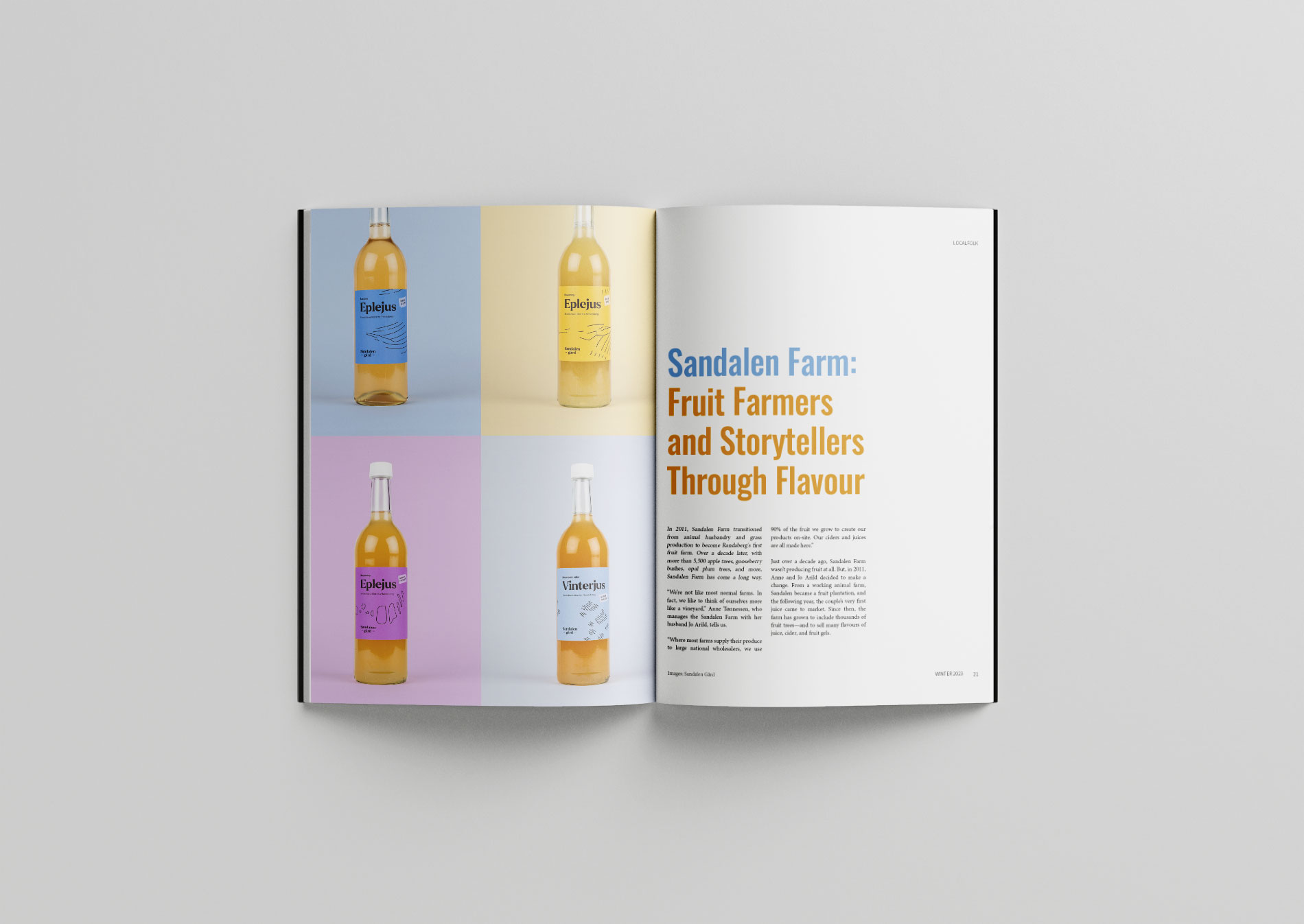
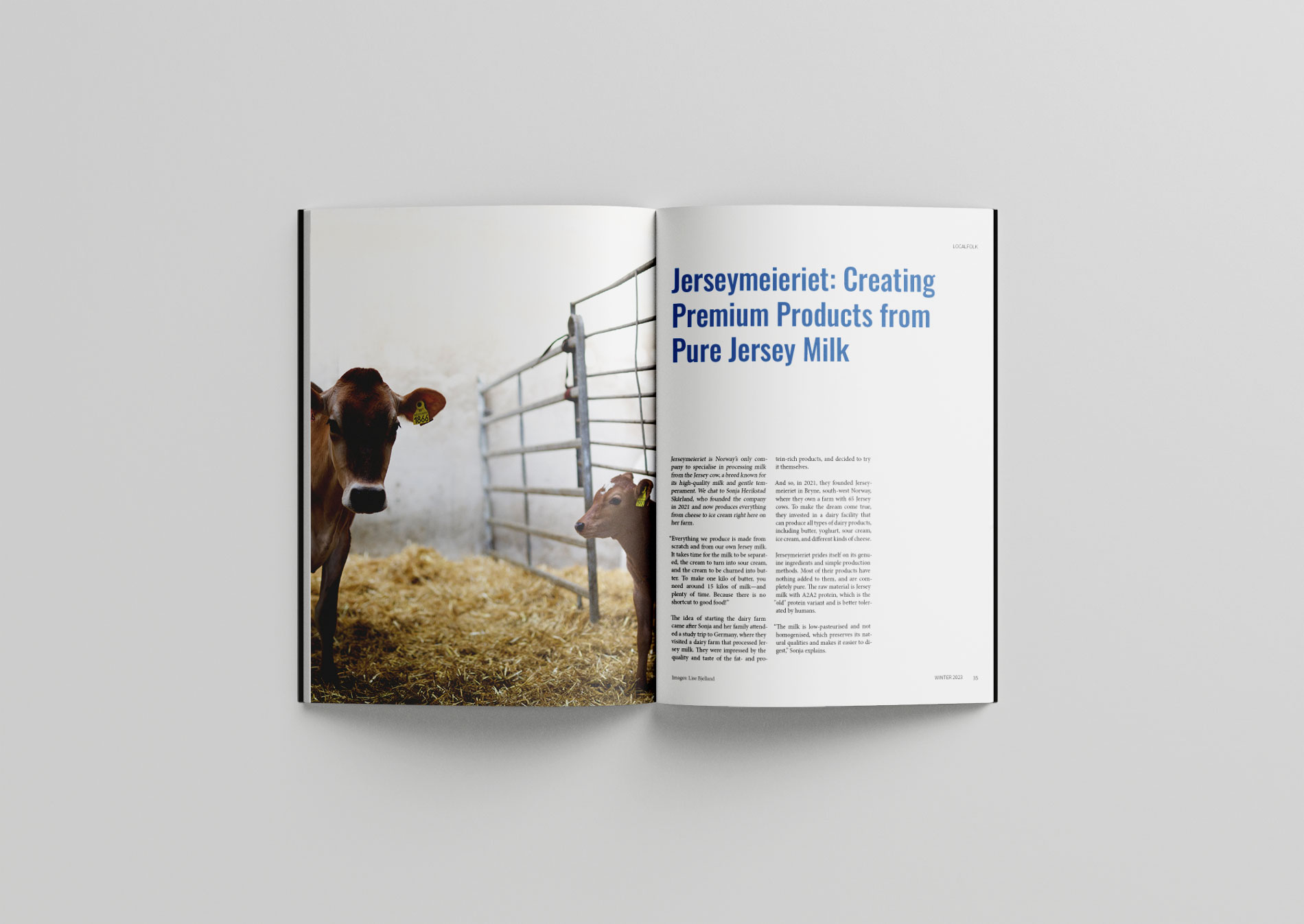
We also sit down with creators who are bringing new techniques, products, and flavours to Norway. For example, we meet a young family in Bryne, Rogaland, who is introducing Jersey milk and dairy products—including cheese and ice cream—to the country. And we hear from a producer of ciders and fruit juice in Rangaberg about the sustainable methods they use to create surprising new flavours in their drinks. Tied with long-standing traditions, it’s this appetite for novelty and innovation that makes Norwegian cuisine so exciting.
Throughout this issue, you’ll get to know each of these businesses—and many more—in their own words, to help you discover the full diversity and beauty of Norway’s food culture.